

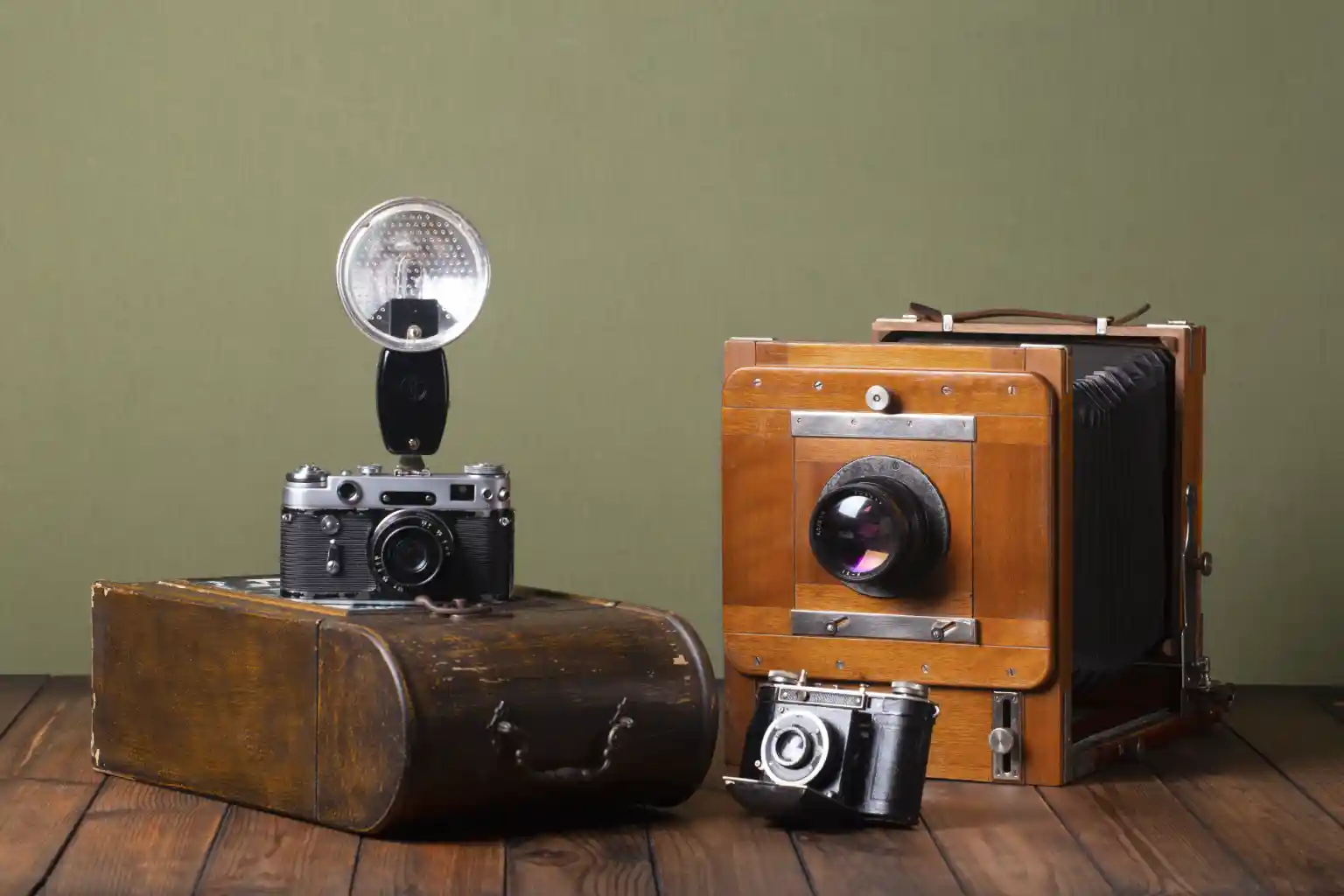
The Ultimate Guide to Digitizing Old Media & Memories in India
Introduction
Every Indian household has that one cupboard, that one attic, or that one dusty box filled with old media. Inside are the irreplaceable moments of our family history—parents’ wedding videos shot in the 1980s, childhood birthday celebrations, the voices of grandparents who are no longer with us, and photographs that capture a version of India that no longer exists. These aren’t just tapes and photos; they are the emotional anchors of our family legacy.
However, India’s unique climate poses a severe threat to these memories. The high humidity during monsoons, the intense heat of summer, and the constant battle with fungus and mold are actively destroying these fragile artifacts. Magnetic tapes are demagnetizing, photos are fading and sticking together, film reels are becoming brittle, and audio cassettes are snapping. Every day you wait, another piece of your family history degrades beyond recovery.
Digitization is not just a technological upgrade—it is an act of preservation. By converting your old media into digital formats, you ensure that these memories become immortal, easily shareable across generations, and safe from the ravages of time and climate. This comprehensive guide will walk you through every format of old media, explain the risks, and show you exactly how to preserve them—whether you choose to do it yourself or trust the experts at ANS Digital Media to handle it for you.
Section 1: VHS Tapes – The Wedding Videos & Childhood Memories at Risk
VHS tapes were the backbone of Indian family memories from the late 1970s through the early 2000s. These bulky, rectangular cassettes captured our most cherished moments: the grand Indian weddings with their multi-day ceremonies, the first steps of children, family gatherings during Diwali and Eid, and countless birthday celebrations. For many Indian families, VHS tapes are the only visual record of elders who have passed away, making them irreplaceable treasures.
However, VHS tapes are on borrowed time. The magnetic tape inside these cassettes is degrading at an alarming rate. A phenomenon known as “sticky-shed syndrome” causes the magnetic oxide layer—which holds the actual video and audio data—to become sticky and shed off the tape backing. Once this happens, the tape literally disintegrates as it plays, leaving behind a pile of brown dust and permanently destroying the recording. In India’s humid climate, this process accelerates dramatically. Mold and fungus grow inside the cassette housing, eating away at the tape and causing irreversible damage.
Even if your VHS tapes appear to be in good condition, they are still at risk. The magnetic signal that stores the video information naturally weakens over time, a process called demagnetization. After 20-30 years, many tapes have lost significant video and audio quality. Colors appear washed out, the picture becomes snowy, and audio develops an annoying hiss. Every time you play a VHS tape, you are physically wearing it down further, as the playback heads scrape against the fragile magnetic surface.
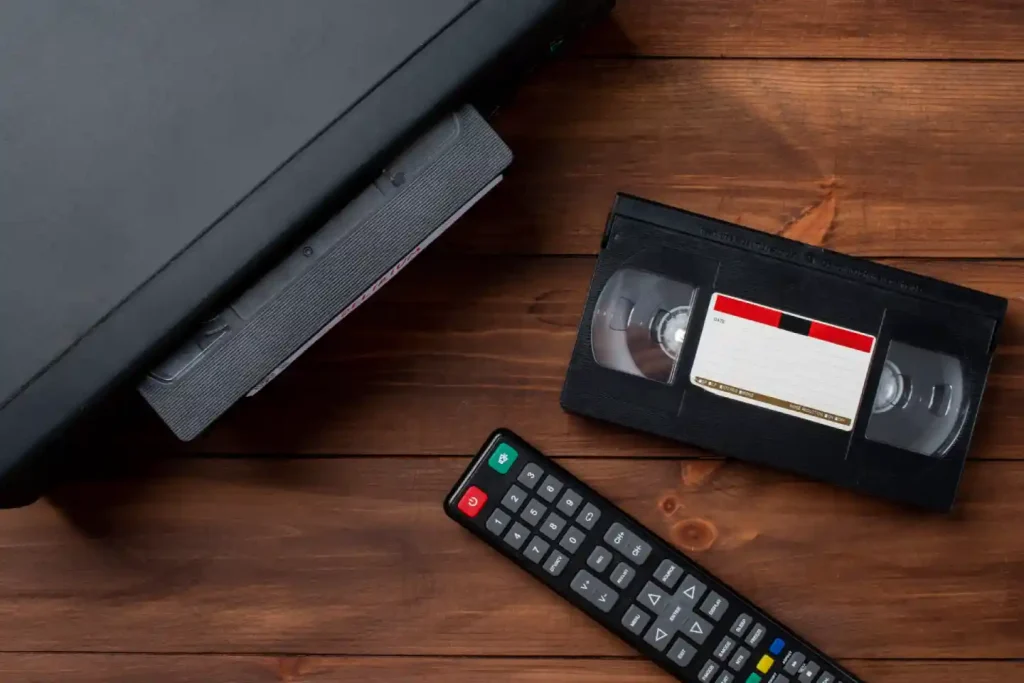
The window to save these memories is closing. Professional VHS-to-digital conversion captures the analog signal and converts it into high-quality digital formats like MP4, ensuring that your family’s most precious moments are preserved in pristine quality for generations to come.
Learn More:
- VHS to Digital Conversion Service – Preserve Your Memories
- The Best VHS to Digital Converter: Your Guide to Preserving Memories
Section 2: VCR Machines & Playback – The Obsolete Technology Holding Your Memories Hostage
While VHS tapes hold the memories, VCR (Video Cassette Recorder) machines were the gateway to accessing them. For decades, the VCR was a centerpiece of Indian living rooms, allowing families to watch their wedding videos, record television programs, and play Bollywood movie rentals. However, VCR technology has been obsolete for over two decades, and this creates a critical problem for anyone trying to access their old tapes today.
VCR machines are mechanical devices with hundreds of moving parts—motors, belts, gears, and playback heads. Over time, these components wear out, dry up, or break. Rubber belts become brittle and snap, motors burn out, and the delicate video heads that read the magnetic tape become clogged or damaged. Finding replacement parts for VCRs is nearly impossible today, as manufacturers stopped producing them years ago. Even if you manage to find a working VCR, it may have been sitting unused for years, making it prone to immediate failure when you try to play your precious tapes.
The technical challenge of VCR playback is significant. VCRs read analog signals from the magnetic tape and convert them into video and audio output. This analog signal is then typically captured by a computer or digital converter and transformed into a digital format. However, if the VCR’s playback heads are misaligned or damaged, the video quality suffers dramatically. You may see tracking lines, color distortion, or complete signal loss. In some cases, a malfunctioning VCR can physically damage the tape itself, tearing or stretching the fragile magnetic ribbon inside.
This is why professional VCR-to-pendrive conversion services are essential. At ANS Digital Media, we maintain a fleet of professionally calibrated VCR machines specifically designed for archival playback. Our equipment is regularly serviced and cleaned to ensure optimal performance. We capture the analog signal directly from the VCR’s output and convert it into high-quality digital formats, ensuring that your memories are transferred safely without risking damage to the original tapes.
Learn More:
Section 3: Old Printed Photos & Film Reels – Capturing India’s Visual History
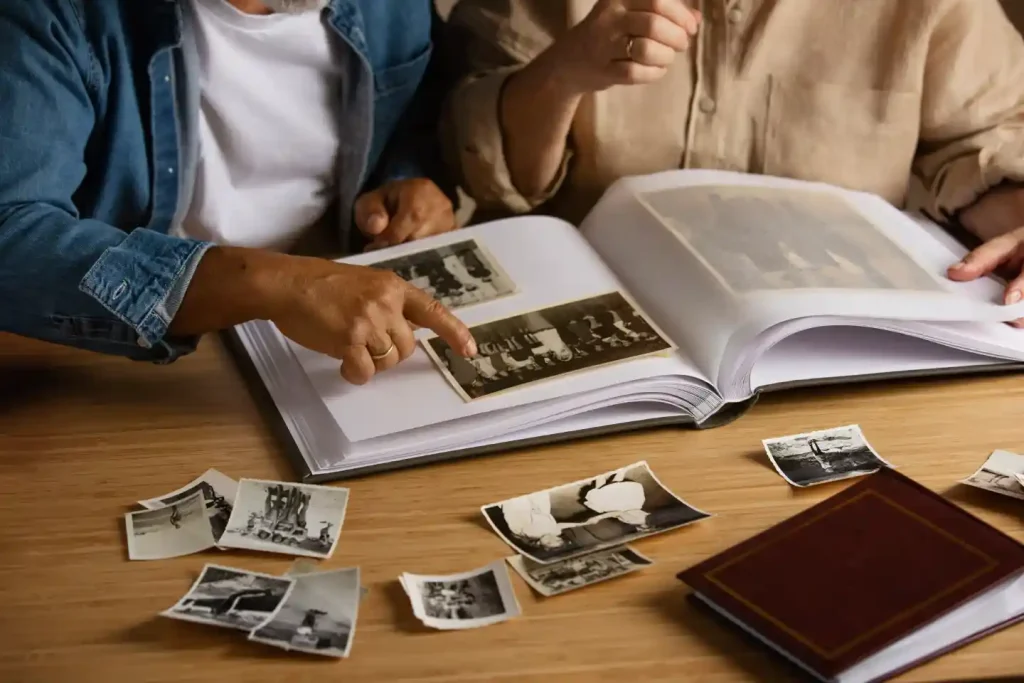
Printed photographs and film reels represent a tangible connection to India’s past. Before the digital age, every family moment was captured on film, developed in darkrooms, and preserved in photo albums. These images document not just personal family history, but the evolution of Indian society itself—the changing fashions, the architecture of old homes, the vehicles on the streets, and the cultural traditions that have transformed over generations.
However, printed photographs are incredibly vulnerable to environmental damage. In India’s humid climate, photos are susceptible to a range of destructive processes. Fungus and mold can grow on the surface, creating unsightly spots and permanently damaging the emulsion layer that holds the image. High humidity causes photos to stick together or adhere to the glass of frames, making separation nearly impossible without tearing. Exposure to light causes colors to fade, turning vibrant memories into pale, washed-out shadows of their former selves. Physical handling, accidental tears, water damage from monsoons, and even the acidic materials in old photo albums all contribute to the deterioration of these precious images.
Film reels, particularly 8mm and Super 8mm formats used for home movies, face even greater challenges. These celluloid films are prone to “vinegar syndrome,” a chemical decomposition process that releases acetic acid (giving off a distinctive vinegar smell) and causes the film to shrink, warp, and become brittle. Once vinegar syndrome begins, it is irreversible and can spread to other films in your collection. The delicate perforations along the edges of the film can tear, and the emulsion can flake off, destroying the images frame by frame.
Professional digitization offers a solution. High-resolution scanning captures every detail of your photographs and films, while digital restoration techniques can repair damage, correct faded colors, and even reconstruct missing portions. For film reels, frame-by-frame scanning preserves the motion and sound of your family’s home movies in stunning digital quality.
Learn More:
- Film & Photo Digitization Services in Chennai
- Best 8mm & Super 8mm Film Scanning Services in Chennai
Section 4: Audio Cassettes, Reel-to-Reel & Vinyl – Preserving the Voices of the Past
Audio formats hold a unique power to evoke memories. The sound of a loved one’s voice, the music that played at your parents’ wedding, or the old Bollywood songs that defined an era—these audio recordings are time capsules that transport us instantly back to specific moments in our lives. In India, audio formats like cassettes, reel-to-reel tapes, and vinyl records were the primary means of preserving sound for decades, capturing everything from family voice messages to vintage music collections.
Audio cassettes, the most common format from the 1970s through the 1990s, are particularly vulnerable. The magnetic tape inside is thin and fragile, prone to stretching, snapping, or tangling inside the cassette housing. In humid conditions, the tape can absorb moisture, causing it to stick to itself or develop mold growth. The lubricants that keep the tape flexible can dry out over time, making the tape brittle and likely to break during playback. Many people have experienced the frustration of trying to play an old cassette only to hear it warp and slow down, or worse, have the tape chewed up by the player.
Reel-to-reel tapes, often used for higher-quality recordings or professional applications, face similar challenges. These open-reel tapes are even more exposed to environmental damage, as they lack the protective plastic housing of cassettes. Dust, humidity, and physical handling can all degrade the tape quality. Vinyl records, while more durable than magnetic tape, are susceptible to scratches, warping from heat, and the accumulation of dust and dirt in the grooves, all of which degrade audio quality.
Professional audio digitization services carefully clean and prepare these fragile media before transfer. Using high-quality playback equipment and analog-to-digital converters, the audio is captured in lossless formats like WAV or high-bitrate MP3, preserving the warmth and character of the original recording. This ensures that the voices of your ancestors, the music of your youth, and the sounds of your family’s history are preserved with clarity and fidelity.
Learn More:
- Practical Benefits of Digitizing Your Audio Collection in Chennai
- DIY Audio Conversion vs. Professional Service: What You Need to Know
- Audio Conversion Services (Cassettes, LPs, Reel-to-Reel)
Section 5: 35mm Negatives & Slides – The Hidden Treasure of Your Photo Collection
While printed photographs are the most visible part of most family photo collections, the negatives and slides often represent the highest quality versions of those images. In the film photography era, the negative was the original “master” from which all prints were made. These 35mm film negatives contain far more detail and dynamic range than any printed photograph, making them incredibly valuable for high-quality digitization.
However, negatives and slides are among the most fragile of all photographic media. The thin strips of celluloid film are extremely susceptible to physical damage—scratches, fingerprints, and bends can permanently mar the image. In India’s humid climate, fungus is a constant threat. Fungal growth on negatives appears as branching, root-like patterns that etch into the emulsion layer, permanently destroying the image data. Once fungus attacks a negative, the damage is irreversible.
Slides, or transparency films like Kodachrome and Ektachrome, face additional challenges. These positive films were designed for projection and viewing, but the dyes used to create the colors are inherently unstable. Over time, slide colors shift dramatically—reds and magentas tend to persist while blues and greens fade, leaving images with an unnatural color cast. This color fading is accelerated by exposure to light and heat, making proper storage critical.
Professional scanning of negatives and slides requires specialized equipment capable of capturing the full dynamic range and resolution of the original film. High-resolution scanners can extract details far beyond what is visible in printed photographs, revealing textures, expressions, and background elements that may have been lost in the printing process. Digital color correction can restore faded colors to their original vibrancy, while dust and scratch removal techniques can clean up decades of accumulated damage.
For families with extensive collections of negatives and slides, professional digitization unlocks a treasure trove of high-quality images that can be printed, shared, and preserved for future generations.
Learn More:
Why Choose ANS Digital Media for Your Digitization Project?
With over a decade of experience in digital media conversion, ANS Digital Media has established itself as India’s trusted partner for preserving family memories. Our team combines cutting-edge technology with meticulous attention to detail, ensuring that every tape, photo, negative, and audio recording is handled with the care and respect it deserves.
We understand that your old media contains irreplaceable moments—wedding videos of parents who are no longer together, childhood recordings of grown children, the voices of grandparents who have passed away. That’s why we’ve developed a secure, professional process that prioritizes the safety and quality of your media. Our facility in Chennai is equipped with professional-grade playback and scanning equipment, regularly maintained and calibrated to extract the highest possible quality from your aging media.
Our services include professional color correction, audio enhancement, and digital restoration to bring your memories back to life. We offer convenient pick-up and delivery services across Chennai and Bangalore, and secure shipping options for clients throughout India. Every project is handled by trained professionals who understand the sentimental value of your media and treat it accordingly.
Whether you have a single box of old VHS tapes or an entire attic full of family archives, ANS Digital Media has the expertise and capacity to handle your digitization project with care, security, and professionalism.
Don’t Let Your Memories Fade Away
Your family’s history is irreplaceable. Every day you wait, another piece of that history degrades a little more. The humidity, the heat, the passage of time—these forces are constantly working against your old media. But it’s not too late to preserve these precious moments for future generations.
Don’t want to do it yourself? Ship us your tapes, and we’ll digitize them for you. Get a quote today.
Contact ANS Digital Media:
- Chennai: No 51, Malliga Nagar2nd Street, Pallavaram,Chennai 600043.
- Phone: +91 9884826914/+91 7867072278
- Website: ansdigitalmedia.com

Antony Bebin
Antony Bebin is a Digital Intermediate Specialist with 10+ years shaping the look of films and content in post-production. A color grading expert fluent in DaVinci Resolve, he bridges technical precision with creative vision — from raw footage to polished final outputs. When he writes about color, he's lived every frame of it.
